Zanzibar Project
A Participatory Research Partnership to Amplify Community-Led Early Childhood
Development (ECD) Practices in Zanzibar
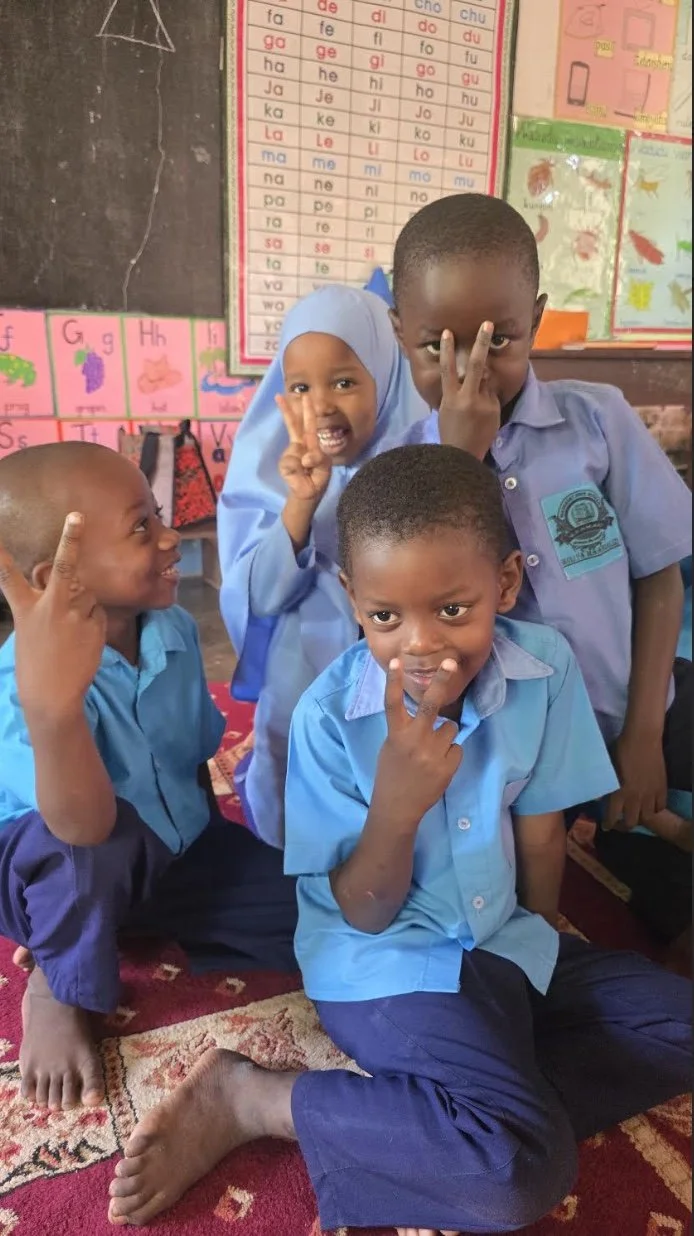
A recent government-commissioned study revealed that 32% of children aged 0-3 in Zanzibar are at risk of developmental delays, nearly six times the global average (Zanzibar: Securing the Future Through Early Childhood Development, 2025). Using a Community-Based Participatory Research (CBPR) approach, this project aims to address the need for research that is deeply rooted in local context. The primary objective is to holistically investigate the caregiving ecosystem for children aged 0-3 years old from low socioeconomic backgrounds in Unguja to generate a scientifically-informed understanding of local strengths and opportunities for healthy child development. We aim to understand the caregiving practices and early learning opportunities while also deeply exploring what mothers and fathers in Unguja consider important for their young child’s development and parenting success.
The project employs a multi-phase and multi-method approach:
Phase 1: Laying the Foundation
Stakeholders’ virtual interviews to understand the local ECD landscape.
Iterative in-person workshop with key government, international and local stakeholders designed to build a collective vision of caregiving practices, and identify community strengths and challenges.
Trust-Building and Relationship Establishment: Formalizing the partnership and fostering trust with local communities.
Contextual Mapping: In-person observation in formal and non-formal childcare
settings to understand local cultural norms, caregiving beliefs and practices
Phase 2: In-Depth Data Collection
We engage families as co-researchers to collect rich, multi-dimensional data. This includes parent-led video recordings of daily interactions, comprehensive surveys, analysis of health records, and the collection of biological samples to provide a complete picture of the child's environment and health indicators.
Phase 3: Knowledge-to-Action
The knowledge co-created with the community is synthesized to pilot a caregiver assessment measure for cultural validity and develop a culturally-relevant, strengths-based framework. This framework will directly inform the design of a future intervention, providing a sustainable, locally-owned solution to enhance caregiver sensitivity and support the government’s ambitious ECD goals.
Strategic Collaboration: This research is a strategic collaboration between the Teaching, Learning, and Development (TLD) Lab at NYU Abu Dhabi and the Zanzibar Research Centre for Socio-Economic and Policy Analysis (ZRCP).
Collaborators:
Dr. Twahir, Zanzibar Research Centre for Socio-Economic and Policy Analysis
Ola Ahmed, Research Associate, New York University Abu Dhabi
Stefania Vacaru, Postdoctoral Associate, New York University Abu Dhabi