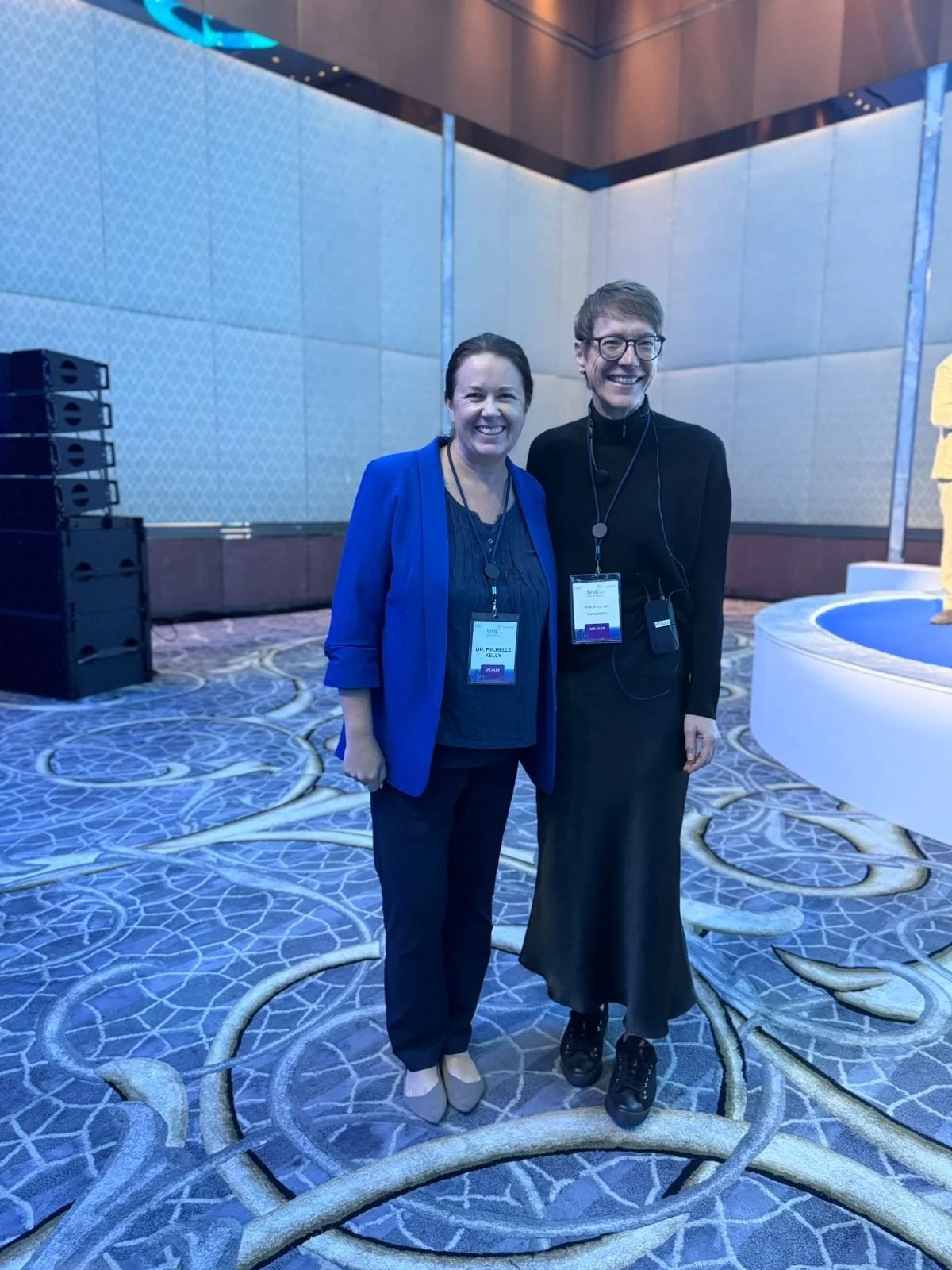
Reflections from the SAKINA Integrated Mental Health Conference
Antje was part of the SAKINA Integrated Mental Health Conference, which brought together researchers, clinicians, and policymakers to reflect on how mental health is shaped by the environments people live in today, from technology and social systems to early childhood contexts.
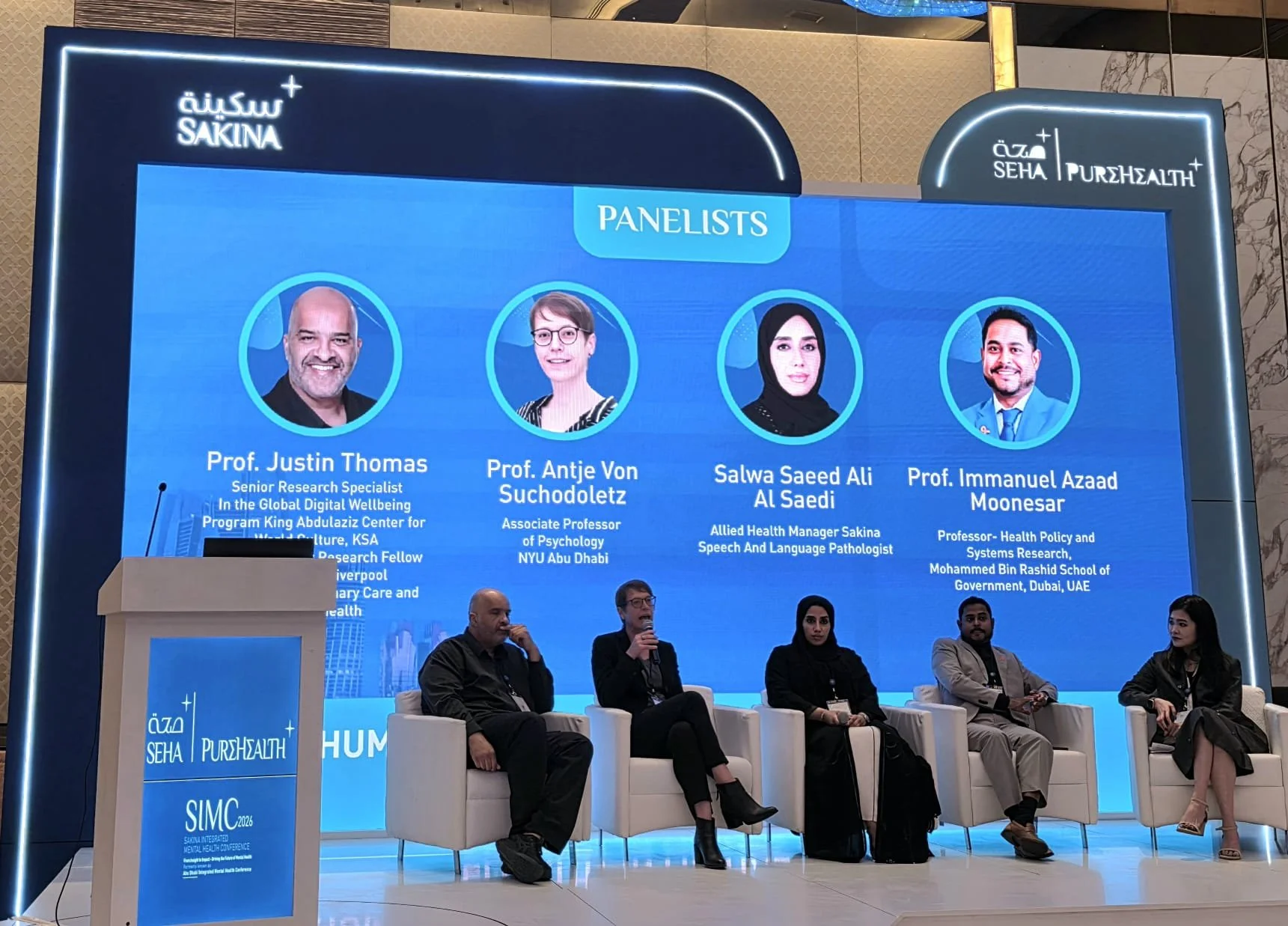
On day one, Antje participated in a panel discussion that moved beyond familiar debates around screen time and behaviour. Instead, the conversation asked a quieter, more difficult question: how is technology misuse shaping mental health and society in ways that are not always obvious? The discussion focused on broader patterns and everyday realities, rather than individual habits alone, highlighting the limits of quick fixes and behavioural rules when addressing complex mental health challenges. The exchange reinforced the importance of looking beyond surface behaviours and paying closer attention to the conditions shaping mental wellbeing. The discussion was enriched by perspectives from Justin Thomas, Salwa Alsaedi, and Immanuel Azaad Moonesar, Ph.D., R.D., and was thoughtfully moderated by Dr. Yufei Gu.



On day two, Antje delivered a research-led talk as part of a session on neurodiversity and digital wellbeing, examining how screens intersect with childhood and wellbeing in the early years. The talk focused on digital wellness in early childhood and why this stage of life matters so deeply. Research shared during the session highlighted how digital devices have become a routine part of family life from a very young age, with more than nine in ten families with young children owning multiple digital devices. Among families who use digital media, patterns of use vary widely. Many parents report using screens to support learning, connection, or curiosity, while a smaller proportion rely on digital media primarily to keep children occupied. Levels of parental involvement also differ, shaping how children experience screens in their everyday routines.
A central reflection from the talk was that screens themselves are rarely the issue. Their influence depends on the role they come to play in a child’s day, whether they sit alongside connection and care or quietly replace them. These conversations remain essential for anyone working at the intersection of mental health, childhood development, and digital wellbeing.
The day two session was shaped by generous perspectives from Dr. Binu George and Dr. Justin Thomas, and guided with care by the session moderators, Dr. Khaled Kadry and Dr. Madeeha Shammas Rahim Rasool from SAKINA/SEHA.